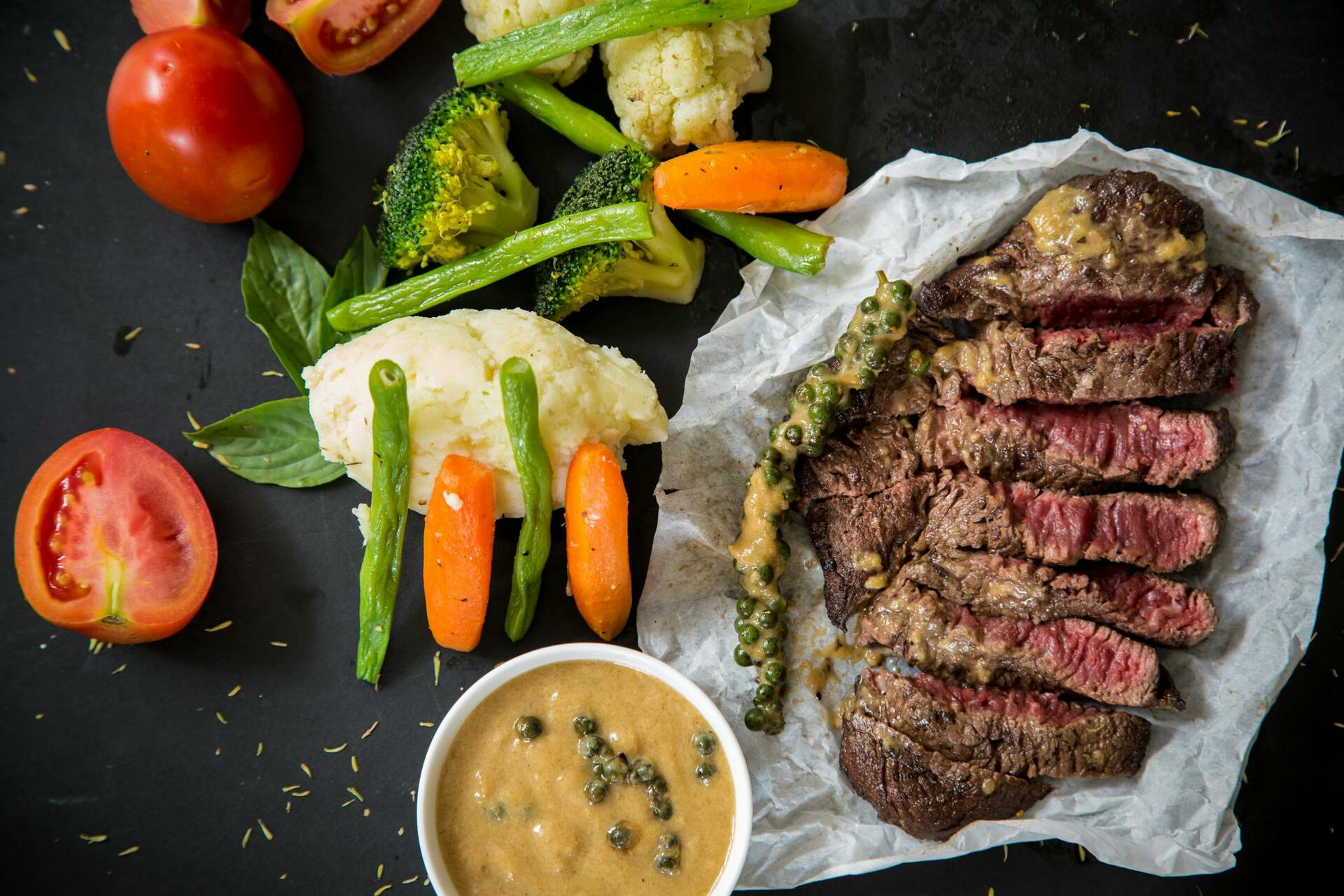
Nothing sends a plate back faster than a steak cooked wrong. The customer ordered medium-rare and got medium-well, and now you've lost the steak, the margin and probably the customer. The good news: cooking steak to order isn't magic. It's a handful of habits and a thermometer.
Before it hits the heat
Take the chill off. Let the steak sit out of the fridge for 20–30 minutes before cooking. A fridge-cold centre cooks unevenly: grey outside, raw inside.
Dry it. Pat it dry with paper towel. Moisture steams instead of searing, and you lose that brown crust where all the flavour is.
Oil the meat, not the pan. Rub a little oil over the steak, then season generously with salt and pepper just before it goes on.
Cooking
Get it properly hot. A grill or heavy pan should be smoking hot before the steak goes on. If it doesn't sizzle loudly, it's not ready.
Leave it alone, then turn. Give it time to form a crust before you move it. Turn it with tongs, never a fork: every hole lets the juices run out.
Use a probe. Feel and timing get you close. A probe thermometer gets you there every time. Take the steak off a few degrees before your target, because it keeps cooking while it rests.
Pull it off at:Rare: about 48°CMedium-rare: about 53°CMedium: about 58°CMedium-well: about 63°CWell done: 68°C+
Rest it. Five minutes on a warm plate or rack lets the juices settle back into the meat. Cut it straight away and they end up on the board.
Slice against the grain. If you're slicing to serve, cut across the grain for a tender bite.
For the kitchen
Agree on what each doneness means with your whole team and your floor staff, then stick to it. Put the temperatures on the wall by the grill. Give every grill cook a probe and expect them to use it. Read the docket twice: most steaks go back because someone misread "MR" in the rush, not because they can't cook.
Feel gets you close. A thermometer gets you there every time.